A friendlier way to understand your network.
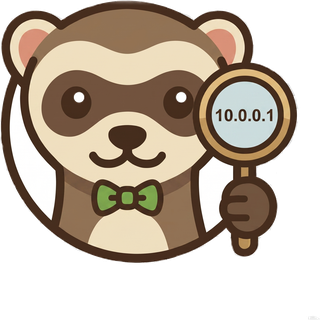
IPFerret is the modern alternative to dusty IP-lookup pages. Built privacy-first, designed like a real product, and fronted by a curious ferret named Finn.
- Free tools
- 30
- In-depth guides
- 47
- Accounts needed
- 0
- First-party cookies
- 0
IP, DNS, WHOIS, CIDR, IPv6, TLS, ports, traceroute…
Plain-English networking, 1,300+ words each.
No sign-up. Your IP is never stored in our database.
Google’s analytics and ad cookies are listed in Privacy.
Our mission
Make the boring web tools feel alive again.
Every developer has at one point opened an IP-lookup page that hadn't been touched since 2008 — a 14-pt sans-serif headline, a banner ad with a fake download button, and a wall of dense text. IPFerret is the opposite of that. It's built with the same care a modern SaaS product gets: thoughtful typography, real responsive layouts, dark mode, keyboard-accessible everything.
And it's built privacy-first. No fingerprinting scripts, no analytics tags from companies you've never heard of, no selling your data to brokers. The only third-party scripts are Google Analytics, which counts visits, and the Google AdSense loader, which funds the site — both disclosed up-front in the privacy policy, and behind an explicit consent dialog for EU/UK/Swiss visitors.
What we stand for
Four principles that shape every line of code.
Privacy first
No fingerprinting. No data brokers. Ads are disclosed and consent-gated for EU/UK/Swiss visitors.
Fast by default
Server-rendered, so every page is readable before any script runs. The answer should be on screen before you notice it loading.
Open by design
Every UI surface is a documented JSON API. The source code is annotated and built to be self-hosted.
Honest about limits
IP geolocation is approximate. We say so loudly. We don't pretend an estimate is a fact.
How it works
Three moving parts. That's it.
IPFerret is intentionally small. Every request flows through the same three layers, no matter which tool you use.
Edge captures the request
Caddy reverse-proxies on TLS, parses the X-Forwarded-For chain, and hands a clean request to the Next.js app.
Server renders the answer
A React Server Component reads your IP, parses your user-agent, asks RIPE / RDAP / DNS-over-HTTPS for the bits we don't know, and renders HTML.
Browser receives a finished page
No JS-driven data fetching, no spinners, no skeleton screens. The page arrives complete. The mascot animates because mascots are entitled to vibes.
Meet the mascot
This is Finn the IP Ferret.
Ferrets are fast, curious, and dedicated to a good investigation — exactly the kind of energy a network-lookup product needs. Finn lives at the top of every page, wears a small magnifying glass, and refuses to look up your DNS records unless you ask politely.
- Curious — pokes through every header to find the interesting bit.
- Fast — server-rendered, no waiting on third-party scripts.
- Honest — flags "approximate" when the data is approximate.
- Friendly — no jargon walls. Plain English first, RFCs on request.
Who runs IPFerret
Built and run by Liquid Monks
IPFerret is a project of Liquid Monks, an independent software studio in Chicago. The Learn guides, the tools and the server the site runs on are all written, built and maintained by Liquid Monks — there is no content farm or outsourced writing behind it.
Every guide shows when it was published and when it last changed. If you find something wrong or out of date, the contact page explains how to tell us; corrections update the date on the page.
Got an idea, a bug, or a strong opinion?
IPFerret is a one-person passion project. Real feedback shapes it more than any roadmap. Drop a line and Finn will sniff it out.